

AWD vs. FWD: Which Do You Need?
What Is the Difference Between AWD and FWD?
The difference is which wheels receive engine power. Front-wheel drive (FWD) sends power only to the front wheels. All-wheel drive (AWD) can send power to all four wheels, usually adding the rear wheels when the front tires start to slip.
At Team One Hyundai of Gadsden, shoppers ask us this question almost every day. Many of our most popular SUVs come either way, so knowing the difference helps you choose with confidence.
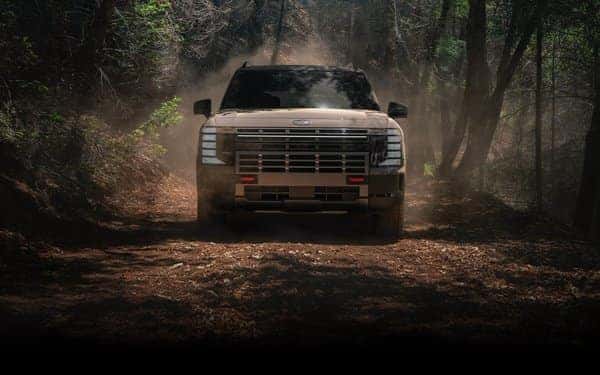
What Is Front-Wheel Drive?
Front-wheel drive is a layout where the engine powers only the front wheels. Those same front wheels also steer the vehicle. FWD is the standard setup on most compact cars and many crossovers.
FWD has several practical strengths:
- Better fuel economy: Fewer moving parts and less weight mean less energy used.
- Lower purchase price: FWD versions usually cost less than AWD versions of the same model.
- Good everyday traction: The engine’s weight sits over the front drive wheels, which helps grip.
- Simpler drivetrain: There are fewer driveline parts to maintain over time.
What Is All-Wheel Drive?
All-wheel drive is a system that can power all four wheels, either full time or when sensors detect slip. Most modern AWD crossovers run mostly in front-wheel drive and send power rearward when it helps.
AWD’s main advantage is getting moving on slick surfaces. Consumer Reports describes AWD as being about “getting your car moving from a dead stop.” It also helps with smooth acceleration on wet roads, gravel, grass and snow.
What Is Hyundai HTRAC AWD?
HTRAC is Hyundai’s name for its all-wheel-drive system on many gas and hybrid models. Hyundai says HTRAC monitors more than 50 vehicle inputs over 100 times per second to calculate the torque each wheel needs. It can run in front-wheel drive when that is the efficient choice and shifts power to the rear when conditions call for it.
Depending on the model, drive modes such as Eco, Normal, Sport and Smart change how HTRAC behaves. Sport sends more power to the rear wheels for sharper handling. Some trims also add Terrain Mode settings for Mud, Snow and Sand.
AWD vs. FWD Side by Side
Here is how the two layouts compare on the points that matter most to drivers.
| Factor | Front-wheel drive (FWD) | All-wheel drive (AWD) |
|---|---|---|
| Traction when accelerating | Good on dry and wet pavement | Better on wet, loose or snowy surfaces |
| Braking distance | Depends on tires and brakes | Same; AWD does not help you stop |
| Fuel economy | Usually higher | Usually a little lower |
| Purchase price | Usually lower | Usually higher |
| Weight | Lighter | Heavier |
| Best for | Commuting and highway driving | Slick roads, unpaved surfaces, towing launches |
Does AWD Use More Gas Than FWD?
Yes, AWD usually uses a little more fuel than FWD because of the added weight and parts. EPA ratings for several 2026 Hyundai models show a gap of one to two mpg combined.
| 2026 model | FWD combined mpg | AWD combined mpg |
|---|---|---|
| Tucson (gas) | 28 | 26 |
| Palisade (3.5L V6) | 21 | 20 |
| Palisade Hybrid | 31 | 29 |
These are EPA estimates from FuelEconomy.gov. Your actual mileage will vary, so check the window sticker on the specific vehicle.
Is AWD Better in the Rain?
AWD helps in the rain when you accelerate from a stop or merge, because it can shift power to the wheels with the most grip. It does not help you stop sooner or take a curve faster. Slowing down and keeping tires in good condition are still the most important steps on wet roads.
Does AWD Help You Brake or Turn?
No, AWD does not shorten stopping distances or improve grip in a turn. Consumer Reports testing found AWD “didn’t aid in braking or in certain cornering situations.” Braking and cornering grip come from your tires, which is why tread depth and the right tire type matter on any vehicle.
Hyundai makes the same point. Its guidance notes that AWD is not a substitute for winter tires when roads are snowy.
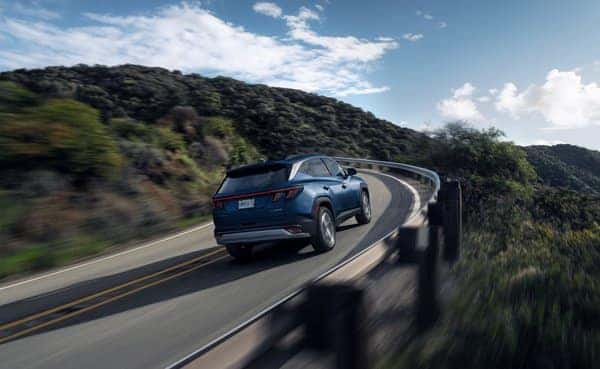
How Is AWD Different From 4WD and RWD?
Four-wheel drive (4WD) and rear-wheel drive (RWD) are two other layouts you may see while shopping. Four-wheel drive is a system most often found on body-on-frame trucks and off-road SUVs, and it is usually engaged by the driver for rough terrain. All-wheel drive works automatically and is built for changing road conditions.
Rear-wheel drive sends power only to the rear wheels. Among 2026 Hyundai models, the IONIQ 5 and IONIQ 9 electric SUVs are offered with a single rear motor, and dual-motor AWD versions add a front motor for extra traction.
Which Hyundai Models Offer AWD?
Most 2026 Hyundai SUVs offer AWD, along with the Santa Cruz and Sonata. EPA listings for the 2026 model year show AWD versions of these models:
- Kona: Available AWD.
- Tucson: HTRAC AWD available on gas and hybrid trims and standard on the Plug-in Hybrid.
- Santa Fe: Available AWD on gas and hybrid models.
- Santa Cruz: Available HTRAC AWD.
- Palisade: Available HTRAC AWD on gas and hybrid models; the XRT PRO comes with HTRAC AWD standard.
- Sonata: Available AWD.
- IONIQ 5 and IONIQ 9: Available dual-motor AWD on these electric SUVs.
The Venue and Elantra are front-wheel drive. Shop AWD and FWD versions side by side in our new vehicle inventory, including the Tucson and Santa Fe.
Availability of AWD often depends on the trim. Our guide to what vehicle trim levels really mean explains how trims and packages work.
How Do You Decide Between AWD and FWD?
The right choice depends on where and how you drive. Ask yourself these questions:
- Do you often drive on gravel, dirt or grass? AWD helps you keep moving on loose surfaces.
- Do you launch a boat or tow? AWD can help when pulling away on wet or sloped ground.
- Is most of your driving on paved roads? FWD with good tires handles everyday driving well and saves fuel.
- Is fuel cost a top priority? FWD usually has the higher EPA rating.
- What is your budget? FWD versions usually cost less, which can leave room for a higher trim with more features.
Test Drive Both at Team One Hyundai of Gadsden
The best way to feel the difference is to drive an AWD and FWD version back to back. Browse our new vehicle inventory or our pre-owned inventory, then contact our team to line up a visit.
Team One Hyundai of Gadsden is at 937 W. Grand Ave in Rainbow City, serving Rainbow City, Gadsden and all of Northeast Alabama. Call sales at (256) 399-4299 to ask about current AWD and FWD availability and schedule a test drive.
0 comment(s) so far on AWD vs. FWD: Which Do You Need?